about
Portrait of Dr. Aylon Cohen

I am the Departmental Lecturer in Feminist Political Theory at the University of Oxford. Prior to coming to Oxford, I was a lecturer at the Otto Suhr Institute of Political Science at the Free University of Berlin. I have previously written on topics in Democratic Theory, Early Modern Political History, Queer-Feminist Theory, Affect Studies, and Non-Human Political Theory.

I am currently writing a history of the rise of fraternity and sodomy as co-constitutive symbols, practices, and feelings of equality in Early Modern England. The book investigates how the English Revolution of 1688 gave rise to novel ideas and practices of gender and sexuality and shows how fears concerning sodomy and gender-nonconformity shaped modern understandings of equal male citizenship and democracy in Britain.

My work has appeared in Political Science & Politics, Contemporary Political Theory, Modern Intellectual History, Contemporary Political Theory, Capacious: Journal for Emerging Affect Inquiry, .

My research has been supported by The John Fell Fund, The Andrew W. Mellon Foundation, The Social Sciences and Humanities Research Council of Canada, The Nicholson Center for British Studies, and The Pozen Family Center for Human Rights.

I am happy to collaborate with other academics, artists, and researchers.

publications
  • Grooming Authoritarianism: Anti-Trans/Queer Panic as Pedagogy for Democratic Decline

    We address the anti-trans and queer panic integral to the ascendance of authoritarian politics in the United States and argue that these moral panics function as pedagogical tools that cultivate authoritarian dispositions under the guise of child protection and moral order. In response, we call on all political scientists to "queer" political science by undoing the cisheteronormative assumptions that structure the discipline's epistemology, research agendas, and normative imaginaries. This is not the special obligation of LGBTQ scholars alone but all political scientists. Following Eve Kosofsky Sedgwick's orientation away from a "minoritizing" toward a "universalizing" epistemological perspective, we contend that queering political science opens the field to analyses that grasp how gender and sexuality are central to the reproduction of authoritarianism, and thus indispensable to any analytical and political efforts to resist democratic decline. Read full text →

  • From the Body of the King to the Body of the Nation: Sovereignty, Sodomy, & the English Revolution of 1688

    This article explores how rumors of monarchical sodomy at the turn of the eighteenth century became entangled with newly emerging conceptions of the nation and nationalized space. After the 1688 Revolution in England, accusations of the king's sodomy increasingly mobilize territorial rather than theological understandings of sodomy's danger, transforming sodomy's terror from a satanic threat to the Christian kingdom to a national threat to the English nation. While historical studies on the territorialization of sovereignty often focus on structural transformations to the state, these accounts rarely attend to transformations in political feeling. This article shows how a novel discourse of national sodomy helped unsettle long-standing attachments to the king as the embodiment of sovereign power. Moreover, this article methodologically innovates the study of state sovereignty by attending to conceptual problems of political attachment through the study of an affectively loaded concept such as sodomy. Read full text →

  • Gender, Sexuality, and the Problem of Democratic Erosion: Using History to Conceptualize the Present Crisis

    This article critically surveys how the scholarly literature on democratic decline has theorised the relationship between gender, sexuality, and democracy. I show the limitations of the current view of gender ideology as a "symbolic glue" of the far right and propose an alternative conception that centres the materiality of the body. Whereas studies on democratic erosion commonly take the crises of democracy in the 20th and 21st century as their point of analysis, I turn to the early rise of democracy in early modern Europe as a point of comparison. By highlighting the place of gender and sexuality in democracy's historical consolidation, I hope to illuminate the constitutive role of gender and sexuality in democracy's current deconsolidation and show why the crisis of democracy has meant a crisis in the gender order. Read full text →

  • The Inter-est Between Us: Ontology, Epistemology, and the Failure of Political Representation

    In recent decades, theories of representation have undergone a constructivist turn, as many theorists no longer view the represented subject as prior to but rather as an effect of representation. Many democratic theorists have sought to reconceptualize representation and its democratic possibilities by turning away from ontological questions altogether. By focusing instead on how representatives come to know the public interest, theorists now contend that an epistemological account best explains how political representation can foster democratic participation. Yet, theorists of representation have not assessed whether this turn to epistemology has overcome the ontological problems that initially motivated it.

    This article tracks epistemological defenses of representation to outline two models of political representation that attempt to tackle the epistemological problem of constituent interest without turning to ontological questions of foundations. I argue that both theoretical tendencies ultimately remain caught in the problems of foundations and undercut their normative aspirations to defend a properly democratic vision of political participation. Turning to Hannah Arendt's comments on public interest and her writings on council democracy, the article retheorizes the concept of political representation to avoid the ontological problems that beset current accounts. Read full text →

  • Communist Guilt, Public Happiness, and the Feelings of Collective Attachment

    Uprisings in the 21st century rarely display classical political strategies of recruiting militants into political parties. According to Jodi Dean's recent work Crowds and Party, such leaderless revolts cannot meet the challenge of sustaining the upswell of collective energies beyond the event of rebellion. Against a politics she identifies with May '68, Dean proposes a novel defense of the party as an affective infrastructure capable of regenerating the feelings of collective unity experienced in the rebellious crowd.

    Taking up the challenge to reconsider the party, this chapter argues that central to Dean's vision of the party is what I call an affective politics of communist guilt, which ultimately fails to rekindle the kinds of co-operative relations necessary for political struggle. Drawing on Hannah Arendt's concept of public happiness, I argue that the experience of political joy provides a more salutary framework for understanding how crowd participants feel themselves as a collectivity in the event of revolt. Accordingly, this chapter analyzes the crowd from the perspective of its non-sovereign participants and contends that the promise of collective attachment is better secured not through communist guilt but rather riotous happiness. Read full text →

  • Sovereign Chaos and Riotous Affects, Or, How to Find Joy Behind the Barricades.

    A commonly deployed signifier to render the political event of a riot intelligible, 'chaos' describes an affective condition of disorder and disarray. Recounting the 2018 May Day / May 1st protests in Paris, which both politicians and media declared to be a riot, the paper argues that to consider the riot as chaos is to think and feel like a state.

    Critically interrogating the analytical purchase of 'chaos' to describe a riotous assembly of bodies, the paper contends that 'chaos' is not only a theoretically impoverished concept to understand such political events, but also that sovereignty mobilizes 'chaos' as an affective infrastructure of governance to shore up attachment to the security state. Repudiating the sovereign logic of chaos, the paper presents a first-person encounter with a protest-declared-riot in order to explore the various affects that materialize around such events. In so doing, the paper develops an affective approach to theorize relations of political antagonism in the street, arguing that whereas the state weaponizes terror as a form of governance, the rioters weaponize joy as an affective means of resistance. Read full text →

  • From Mute Objects to Militant Subjects: The Politics of Rebellious Animals

    Russian translation: "ОТ БЕЗГЛАСНЫХ ОБЪЕКТОВ К ВОИНСТВУЮЩИМ СУБЪЕКТАМ: ПОЛИТИКА БУНТУЮЩИХ ЖИВОТНЫх1", in ФОНАРЬ ДИОГЕНА: Человек в многообразии практик [DIOGENES' LANTERN: The Human Being in Diversity of Practice], 3-4 (2018): 200-227.

    Dominant animal rights discourse fails to analyze the boundary of the political community as marked by a historical division between logical animals (humans) and phonic animals (nonhumans). In so doing, this discourse merely enables nonhumans to become mute objects of representation rather than subjects of speech, maintaining the exclusion of animals from the political community of speaking subjects. Eschewing moral approaches to the political problem of exclusion, the paper demonstrates that the work of radical democrats provides a political lens with which to approach nonhuman subjectivity and speech… Read full text →

  • ‘We Support Circus Animals Who Kill Their Captors’: Nonhuman Resistance, Animal Subjectivity, and the Politics of Democracy

    Greek translation: Υποστηρίζουμε τα ζώα που σκοτώνουν τους καταπιεστές τους: πολιτική των εξεγερμένων ζώων trans., Kostas Alexiou (Athens: Kynaigei, 2017).

    Animal rights activists and advocates attempt to include nonhuman animals in the human community through reasoned philosophical tracts and by direct action. However, dominant animal rights discourse fails to analyze the boundary of the political community as marked by a historical division between logical animals (humans) and phonic animals (nonhumans). In so doing, this discourse merely enables nonhumans to become mute political objects of representation rather than subjects of speech, and thus maintains the exclusion of animals from the political community of speaking subjects.

    By turning to the work of radical democrats, I argue for a re-conceptualization of animal subjectivity and speech that promises a new framework for attending to the needs and standpoints of nonhuman animals. Exploring three episodes of nonhuman resistance, I argue that a radical democratic framework illuminates how nonhuman animals actively oppose their exclusion from the political community, thus transforming nonhumans from objects of political deliberation into subjects of politics. Read full text →

Book Reviews
  • Tom Head, It's Your World So Change it (Indianapolis, IN: QUE Publishing, 2010) in St Antony's International Review 8:2 (2013): 175-177.
Work Under Review
  • Patriarchy, Fraternity and Love in The Homosocial Contract: A Queer Reading of John Locke's Two Treatises of Government Under review at Journal for the History of Ideas
Work in Progress
  • A History of Manhood Democracy: Fraternity, Sodomy, and the Gestures of Equality Book Manuscript in Progress
  • Who Was the Transvestite? Revisiting a Forgotten Category of Trans Feminism
  • Political Representation, Cannibal Sodomites, and the Gendered Subject of John Locke's Social Contract
  • What is Intellectual in Intellectual History? Language, Action, and the Body in the Study of Ideas
live recordings
(opens in a new tab)
Oxford University Social Sciences Research Spotlight 2026

Short interview on the talk that I would be giving - 'Gender, Sexuality, and the rise of Manhood Democracy' - as part of the Social Science Research Spotlight Seminary at Oxford University highlighting EDI as a driving force in academic excellence. ‘Fraternity not just as a kind of symbol or metaphor, but also in the way in which men interact and relate and feel with one another … that makes up the substance of how it is that we relate to each other as equals’.

(opens in a new tab)
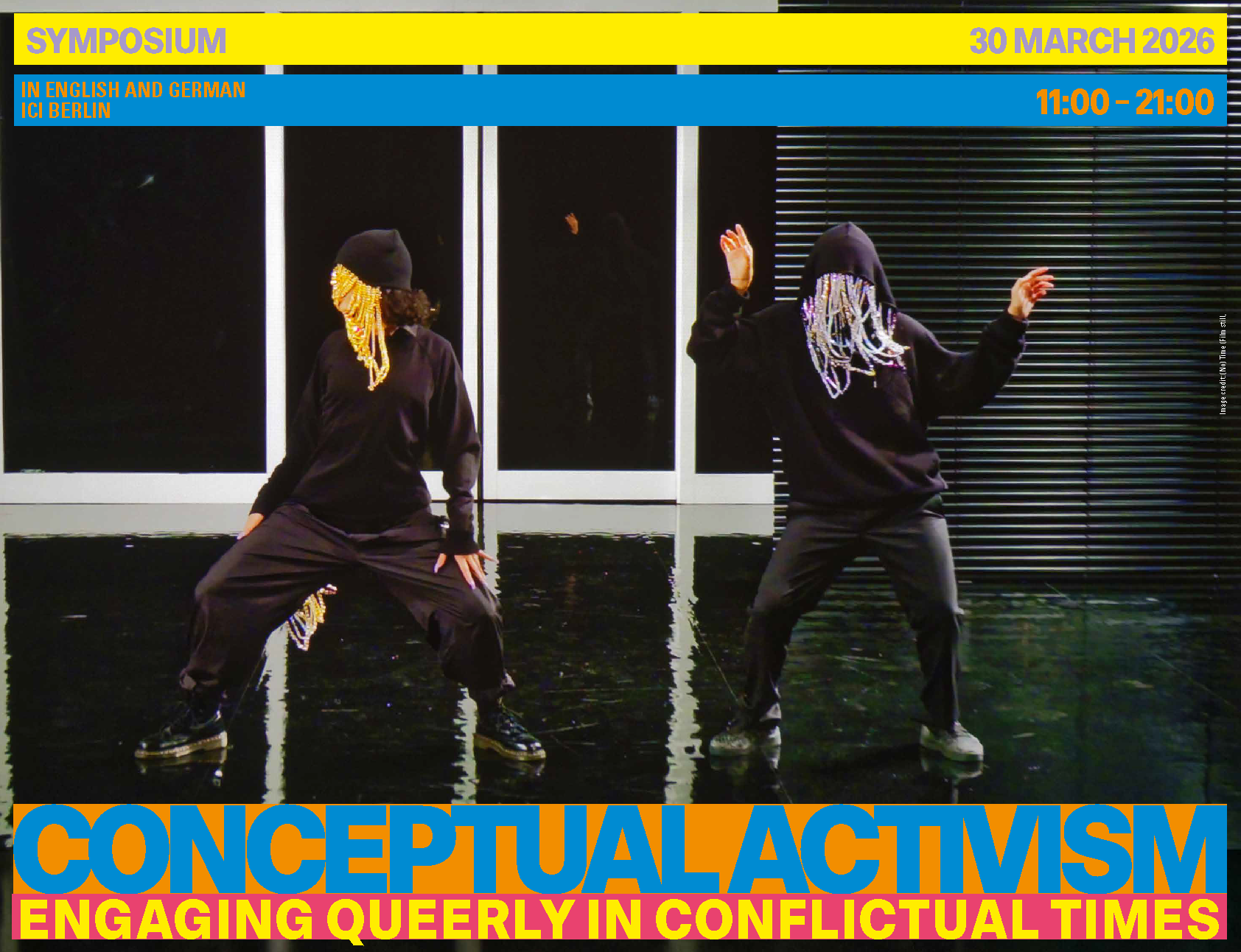
Conceptual Activism ICI Berlin — 2026

Conceptual activism is a way of imagining otherwise, involving the materialization as and the embodiment of concepts. Transforming marginalized concepts into practice can prefigure alternative futures. In this discussion, invited guests presented concepts – like confluence, queer gestures, transecology, or conflictual aesthetics – that inform their professional, activist, or artistic practices. These are intended to inspire reflection and exchange on conceptual activism. There will be a particular focus on queering and transing, and how these approaches support decolonial, ecological, and feminist perspectives, while being open to conflict. With Aylon Cohen, AntkeAntek Engel, Gergana Mineva, Yv Nay, Asmae Ourkiya, Alexandra Papademetriou, Rubia Salgado, Ferdiansyah Thajib, Sifen Wibell. Organized by The Institute for Queer Theory (iQt) in cooperation with ICI Berlin. The symposium is part of Queer Cohabitations, a series of events celebrating the Institute for Queer Theory’s 20th-anniversary (March-October 2026).

teaching
  • Feminism and the Future
  • Michel Foucault and his Histories of Sexuality

    Michel Foucault is arguably one of the most significant thinkers of the twentieth century and his work continues to exercise extraordinary influence across the humanities and social sciences. First published in 1976, the first volume of The History of Sexuality fundamentally changed how we approach questions of political power, history, sexuality, truth, the subject, and resistance, to name just a few topics. Thirty-four years after his death in 1984, the fourth and final volume of Foucault’s historical study of sexuality was published in French in 2018 and translated into English in 2021. To mark this event and seeming closure of Foucault’s investigations on sexuality, this seminar focuses on a critical close reading of Foucault’s four volume study of the history of sexuality: The Will to Knowledge (vol. 1); The Use of Pleasure (vol. 2); The Care of the Self (vol. 3); Confessions of the Flesh (vol. 4). In this seminar, we will examine the historical emergence of this thing we call ‘sexuality’ as narrated across Foucault’s works. We will explore why Foucault considered the history of sexuality to be a privileged example through which to elaborate a new conception of power, history of the state, ethics of the self, and new possibilities of theorizing resistance to contemporary forms of domination.

  • Political Anatomies of the Body-Politic

    Since the Renaissance, the idea of the "body politic" was used to describe European political communities, but the body politic was not simply a metaphor to speak about the state. It was also a way that monarchs would make sense of and exercise political power. With the democratic revolutions of the 18th century, political power is no longer said to cohere in the single body of the king but in the symbolic category of "The People." What exactly happened to the body of political power? Do the democratic people have a body? And more broadly, in what ways do bodies, both metaphorically and in their lived flesh, inform how we make sense of and practice politics today? In this seminar, students will be introduced to historical and contemporary debates on the politics of the body and the body politic in modern democracy. Students will investigate the relationship between this material substance we call the body and the metaphor of the body in the history of western political thought. We will explore how the place of the body in modernity intersects with and is made possible by categories of gender, sexuality, race, and class. Seminar readings will cover historical, radical democratic, feminist, and queer theories that seek to make sense of the political role of bodies in modern liberal democratic society.

  • Advanced Theories of Gender & Sexuality

    Beginning with the "new social movements" such as feminism and gay liberation, this seminar explores key debates around which gender and sexuality were articulated as tenacious but open structures of power subject to political critique and social transformation. The relatively stable yet dynamic character of "the sex/gender system" raises basic questions of structure and event: (1) how are systemic relations of domination and rule historically constituted and sustained over time?; and (2) how can that which is regularly reproduced be fundamentally altered through both quotidian and extraordinary forms of action? Ongoing heteropatriarchal structures have challenged theorists and activists to forge new frameworks of critique. These frameworks will be examined with an eye to how racialized sexuality and gender are created and contested in the context of modern biopolitical capitalism.

  • Power, Identity, Resistance I

    This seminar is the first quarter of a three-quarter sequence in the social sciences. It examines the ways in which power both constitutes and is constituted by economics, politics and culture in the modern era. We look at the different modes by which power is exercised as well as at various means of resisting domination. We also look at the ways in which economic, political and cultural forces interact to shape our identities. Through exposure to canonical texts, this seminar will provide you with tools for thinking through social problems and will enhance your argumentative skills. More broadly, it will help you develop your capacity for critical reasoning and writing.

  • Gender and Sexuality in World Civilizations

    Gender and sexuality are fundamental categories of human existence, as well as key analytical, political, and cultural categories that shape everyday life. Just as important as the ubiquity and salience of these categories is their mutability: their social, political, and ideological valence varies widely according to geographical context and across historical periods. Philosophers, poets, novelists, painters, and composers, as well as scholars from a wide range of disciplines, have addressed these issues, and a substantial corpus of works speak to key themes such as love, sex, citizenship, family, law, violence, religion, culture, creativity, migration, and politics through the lens of gender and sexuality. In this course our objective will be to engage closely with a carefully chosen set of texts, films, and visual objects, in order to open these up to analysis and discussion.

  • Teaching Assistant
Testimonials

I liked that there were options for the participation in class and in general the lecturer was very welcoming to different positions and situations of the student.

Student — Michel Foucault and his Histories of Sexuality, Summer 2024

The professor is extremely helpful and kind whenever a question or problem is raised and happy to respond to any feedback.

Student — Michel Foucault and his Histories of Sexuality, Summer 2024

I liked the small conclusions that the teacher provided via e-mail after each session, they helped me very well to prepare the next course.

Student — Michel Foucault and his Histories of Sexuality, Summer 2024

Aylon’s teaching gave me confidence in and helped me hone my skills in critical analysis.

Student — Michel Foucault and his Histories of Sexuality, Summer 2024

This has been my favorite seminar of my studies at FU so far. The literature was diverse and interesting. I managed to understand the more complex and difficult topics due to interesting discussions in class, framed by the instructor’s questions which allowed us students to contextualize and understand the key concepts.

Student — Political Anatomies of the Body Politic, Summer 2022

I really enjoyed the atmosphere of the seminar, it felt very open, encouraging and sympathetic, it motivated me to try to be active/think about my opinions/perception of topics.

Student — Political Anatomies of the Body Politic, Summer 2022

Aylon Cohen was fantastic! Incredibly knowledgable and did a great job both at giving lectures, guiding discussions, and asking thought provoking questions that kept everyone thinking.

Student — Advanced Theories of Gender and Sexuality, Winter 2021

Attending the lectures and our discussions made my outlooks on the readings change drastically and I felt like I gained a lot from them in terms of my understanding!

Student — Power, Identity, Resistance I, Autumn 2019

Aylon is amazing! Aylon is so smart, asks the most interesting questions that really require you to think, and was so helpful outside of class.

Student — Gender and Sexuality in World Civilizations, Winter 2019

I was a huge fan of the lessons that Aylon taught the class because they all showcased his immense knowledge of political theory and helped me look at the texts from a new light.

Student — Power, Identity, Resistance (TA), Autumn 2017

I loved going to discussion section. Aylon is super smart and always helped us develop our own perspective on the readings by pulling them apart.

Student — Introduction to Political Theory (TA), Winter 2018
contact

Send a message using the form below.

cv
Download full CV (PDF)
Academic Appointments
  • Departmental Lecturer in Feminist Political Theory Department of Politics and International Relations, University of Oxford
  • Lecturer Otto Suhr Institute, Department of Political Science, Freie Universität Berlin
  • Visiting Scholar Centre for British Studies, Humboldt-Universität Berlin
  • Lecturer Otto Suhr Institute, Department of Political Science, Freie Universität Berlin
  • Lecturer Core Curriculum, The College, University of Chicago
Education
  • PhD, Political Science University of Chicago
  • MA, Political Science University of Chicago
  • MPhil, Politics and International Relations (Distinction) University of Oxford
  • BA (Honours), Political Science (Summa Cum Laude) University of British Columbia
Awards & Grants
  • Cynthia Weber Award for Best Conference Paper at APSA 2025
  • John Fell Fund University of Oxford, £10,000
  • Provost Dissertation Completion Fellowship University of Chicago, $33,000
  • Thomas Keymer Award British Society for Eighteenth-Century Studies, £100
  • Mellon International Dissertation Research Fellowship (IDRF) Social Science Research Council, $27,100
  • Pozen Research Grant Pozen Family Center for Human Rights, University of Chicago, $4884
  • Nicholson Center for British Studies Graduate Research Fellowship University of Chicago, $7000
  • Human Rights Doctoral Fellowship Pozen Family Center for Human Rights, University of Chicago, $1000
  • Social Sciences and Humanities Research Council of Canada Doctoral Fellowship (SSHRC) $20,000 (x4 years)
  • Social Sciences Graduate Fellowship University of Chicago, $23,000 (x5 years)
  • Departmental Fellowship Oxford University, £18,000 (x2 years)
  • Political Science Gold Medal University of British Columbia
  • Hector Gordon Munro Scholarship in Political Science University of British Columbia, $1000
Invited Talks
  • Gender, Sexuality and the Rise of Manhood Democracy EDI Speaker Series, Nuffield Department of Medicine, University of Oxford, June 2026
  • Gender, Sexuality and the Rise of Manhood Democracy EDI Event, Department of Politics and International Relations History, University of Oxford, May 2026
  • Roundtable Discussion on the Queer Theatrical Work of Taylor Mac Department of History, University of Oxford, October 2025
  • The Homosocial Contract and the Problem of Sodomy: Towards a Queer Feminist History of Manhood Democracy Faculty of Social & Behavioural Sciences, University of Amsterdam, April 2025
  • Mollies, Manhood, and the Politics of Trans/Sexuality in 18th Century England Politically Engaged Philosophy Workshop, University of Humboldt, Berlin, April 2024
Conference Presentations
  • Who was the Transvestite? Revisiting a Forgotten Category of Trans Feminism Women's Liberation at Sixty, University of London Institute in Paris, June 2026
  • Lauren Berlant, Queer Anarchist American Political Science Association Conference, Pennsylvania, September 2024
  • How does the Body Signify Meaning? Gesture, Affect and Signification in the work of Norbert Elias Annual Philosophy Conference, Athens Institute for Education & Research, May 2024
  • Fraternity, Intimacy, and the Politics of Sodomy in Eighteenth-Century Britain Critical Emancipations, University of Leuven, Belgium, May 2024
  • Gender Trouble, Trans Panic, and the Formation of Fraternal Democracy Sex Panics International Conference, Dublin City University, October 2023
  • Gender Trouble, Trans Panic, and the Formation of Fraternal Democracy International Congress on Political Theory, University of Bremen, September 2023
  • Body Politics After the Fall of the King: Radical Democracy, Feminism, and the Possibilities of Queer Critique "Feminism and the Radical Democratic Imaginary," University of Vienna, July 2023
  • Discourse, the Body, and the Historiographies of Radical Democracy Discourse Theory: Ways Forward, Palace of the Academies, Brussels, March 2023
  • Affect, the Body, and the Emergence of Equality in Early Modern England Centre for British Studies, University of Humboldt, Berlin, November 2022
  • What is Intellectual in Intellectual History? On Discourse and the Body in the study of Democracy European Consortium for Political Research Annual Conference, August 2022
  • What is Intellectual in Intellectual History? On Discourse and the Body in the study of Democracy Affective Societies Colloquium, Freie-Universität, Berlin, July 2022
  • Traffic in Men: Masonic Contracts, Fraternal Contact & The Bourgeois Public Sphere European Conference on Politics and Gender, ECPR, July 2022
  • Affect, the Body, and the Emergence of Equality in Early Modern England Transition to Modernity, CISSR-EHESS International Workshop, Paris, June 2022
  • Brotherly Love, Cannibal Sodomites, and John Locke's Subject of Contract Midwest Political Science Association Annual Conference, April 2022
  • Traffic in Men: Masonic Contracts, Fraternal Contact & The Bourgeois Public Sphere Association for Political Theory Annual Conference, November 2021
  • Traffic in Men: Masonic Contracts, Fraternal Contact & The Bourgeois Public Sphere American Political Science Association Annual Conference, September 2021
  • Traffic in Men: Masonic Contracts, Fraternal Contact & The Bourgeois Public Sphere Venice World Multidisciplinary Conference on Republicanism (online), June 2021
  • The Traffic in Men: Fraternity, Freemasonry, and the Homo-Social Contract Department of Political Science, Purchase College, New York, March 2021
  • Traffic in Men: Masonic Contracts, Fraternal Contact & The Bourgeois Public Sphere Western Political Science Association (online), March 2021
  • From the Body of the King to the Body of the Nation British Society for Eighteenth-Century Studies Conference (online), January 2021
  • Traffic in Men: Masonic Contracts, Fraternal Contact & The Bourgeois Public Sphere Western Political Science Association (cancelled due to covid), April 2020
  • From the Body of the King to the Body of the Nation Early Modern Workshop, University of Chicago, January 2020
  • From the Body of the King to the Body of the Nation Stanford Graduate Conference in Political Theory, Stanford University, January 2020
  • From the Body of the King to the Body of the Nation Susan B. Anthony Institute for Gender, Sexuality, and Women's Studies Writing Collective, University of Rochester, October 2019
  • The Sovereign Sodomite: Sodomy and the English Nation Western Political Science Association, April 2019
  • Brotherly Touch, Fraternal Love, and the Republican Body Midwest Political Science Association, April 2019
  • Feeling Fraternal: Equality, Touch, and The Politics of Men's Bodies Braga Colloquium in the History of Moral and Political Philosophy, University of Minho, January 2019
  • The Sovereign Sodomite: Sodomy and the English Nation Sovereignty and Strangeness Conference, University of Northwestern, October 2018
  • Chaos and the Riot: Auto-Theory on the 50th Anniversary of May '68 Double Binds of '68 Conference, University of Kent, September 2018
  • Cruel Citizenship and the Failure of Representative Democracy Midwest Political Science Association Annual Meeting, April 2018
  • Cruel Citizenship and the Failure of Representative Democracy Political Theory Workshop, University of Chicago, November 2017
  • The Insurrection of Feelings and the Feelings for Insurrection Fifth Annual Radical Democracy Conference, The New School, April 2015
  • The Insurrection of Feelings and the Feelings for Insurrection Enlightened Anarchism Conference, Lapland University, September 2014
  • Nonhuman Resistance, Animal Subjectivity, and the Politics of Democracy The Human-Animal Studies Conference, University of Innsbruck, Austria, February 2014
  • George Rousseau in Conversation with Aylon Cohen Queer Pride/Queer Rage, St. Antony's College, University of Oxford, September 2013
  • Radical Animals, Rupturing Speech: Maintaining Fidelity to Animal Rebellions Third Annual Radical Democracy Conference, The New School, March 2013
  • The Trauma of Sovereignty: Political Realism's Real Emotions Graduate Conference for the Centre for Ethics, University of Toronto, March 2013
  • The Trauma of Sovereignty: Political Realism's Real Emotions Graduate Conference in Political and Legal Theory, University of Warwick, February 2013
  • Anarch@-Feminism and Animal Liberation Oxford Radical Forum, Oxford University, February 2013
Service to the Profession
  • Bristol University Press; Theory & Event; Feminist Philosophy Quarterly; Journal of Social and Political Philosophy
  • Discussant, Katie Cruz, "Materialism, Sex Work, and the Law" The Feminist Jurisprudence Discussion Group, Oxford University
  • Panel Chair, "Thinking Beyond State Coercion" Oxford Graduate Political Theory Conference
  • Panel Organizer, "Contemporary Queer Contributions to the Study of Politics" European Consortium for Political Research Annual Meeting
  • Panel Organizer, "Pluralizing Political Theory: Contemporary Queer Contributions" American Political Science Association Annual Meeting
  • Conference Organizer, "The Politics of the Ordinary" University of Chicago, Political Theory Graduate Conference
  • Discussant University of Chicago Political Theory Workshop
  • Conference Organizer, "Queer Pride / Queer Rage" Oxford University, St. Antony's College
  • Anti-Sexual Violence Campaign Co-Founder "It Happens Here," Oxford University
  • Series Organizer, "Bringing the Collective Together: Nonhuman Animals, Humans and Practice at the University" University of British Columbia